In a Downtown Fort Lauderdale condo resale, the number that decides whether closing actually happens on schedule usually isn't the price, the HOA line, or even the inspection report on the unit itself. It's whether the seller can produce two specific documents inside a window set by state law. Miss that window, and the buyer can walk away from a signed contract with no penalty at all. This isn't a hypothetical footnote buried in the fine print. It's a live mechanism that Florida rewrote in 2024 and 2025, and it lands with particular force on the stretch of Broward County where pre-1996 Intracoastal towers now sit blocks from condo buildings that opened in the last two years.
Here's the part most buyers and even some agents miss: the two documents aren't optional add-ons a seller can skip if the association is slow. Florida law makes them a condition of the contract itself.
What the Statute Actually Puts on the Seller
Under Florida Statute 718.503, a non-developer seller of a condominium unit must deliver, at the seller's own expense, a current copy of the association's most recent structural integrity reserve study, or a written statement that no SIRS has been completed, along with the inspector-prepared summary of the milestone inspection report if one is required for that building. If the association had a turnover inspection completed on or after July 1, 2023, that report goes into the packet too. The contract itself has to carry a conspicuous legend spelling out the buyer's right to cancel.
The current text of the statute states plainly that a contract missing these disclosures is voidable at the buyer's option before closing. That single sentence is the whole ballgame for anyone under contract on an older building right now.
A contract that does not conform to the requirements of this paragraph is voidable at the option of the purchaser before closing.
The Window Just Got Longer, and No One Can Waive It
Before the 2024 amendments, resale buyers had a three-business-day rescission period after receiving the required disclosures. Under the current statute, that window is now 15 days, excluding Saturdays, Sundays, and legal holidays, running from the date the buyer signs and receives everything required under the law. The statute also states that any purported waiver of this voidability right has no effect, meaning a seller cannot simply ask a buyer to sign it away to speed up the deal.
For a buyer, this cuts both ways. Fifteen days is enough time to have an attorney or engineer actually read a SIRS report line by line rather than skim it the night before closing. For a seller, it means the clock doesn't start until the documents are actually delivered, so gathering them from the association manager on day one of the contract, not day twenty, is what keeps a closing date intact.
Why the Las Olas Corridor Feels This More Than the Newest Towers Do
Here is where the picture gets more specific than most guides bother to get. The SIRS requirement applies to every residential condominium building three or more habitable stories tall, regardless of how old it is. The milestone inspection requirement is different. It only kicks in once a building reaches 30 years of age, or 25 years if the local building official has kept the earlier coastal trigger, which many South Florida jurisdictions have. That distinction is the reason two buildings a few blocks apart on the same stretch of Downtown Fort Lauderdale can be carrying completely different paperwork obligations.
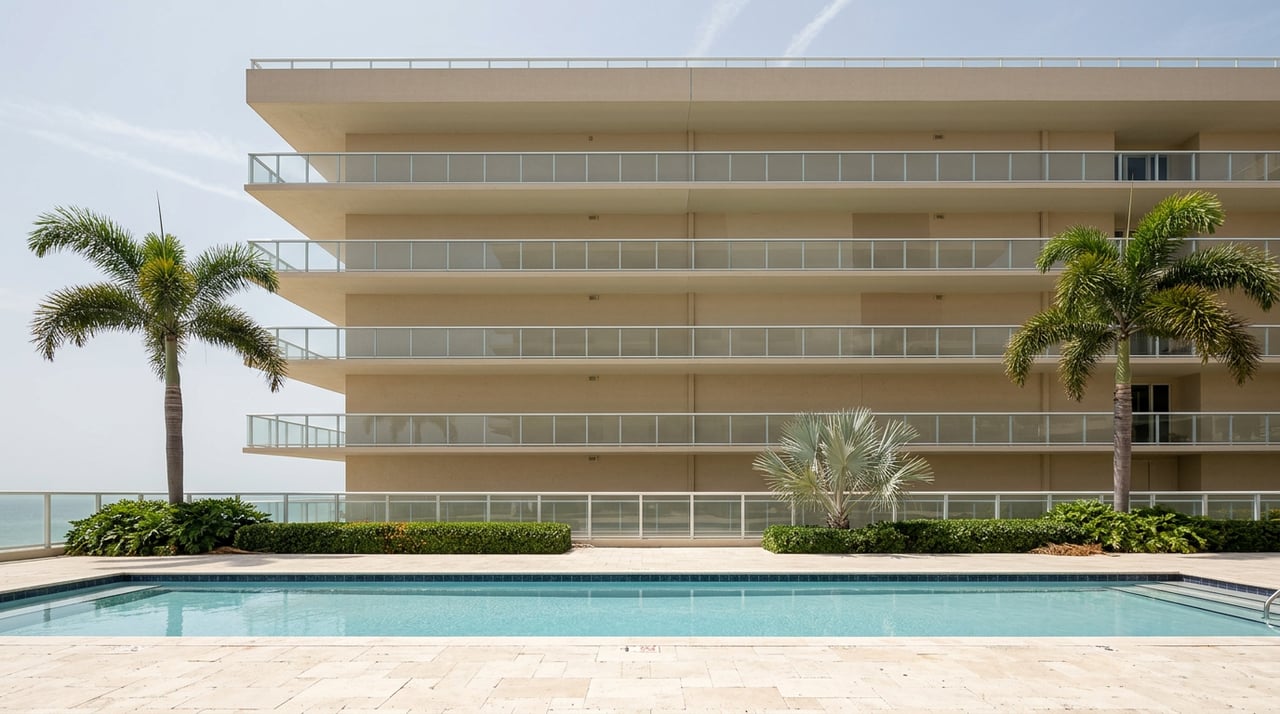
Fort Lauderdale's downtown and Las Olas corridor still has a meaningful concentration of towers built before 1996, part of the same pre-1996 concentration that runs along Broward's beachfront from Hollywood through Fort Lauderdale to Deerfield Beach. Structural engineers working the corridor point to downtown Fort Lauderdale's high-rises and the Las Olas waterfront stock as some of the busier concrete-restoration work in the county, a byproduct of decades of salt exposure on older concrete. Those are the buildings squarely inside milestone territory today. Meanwhile, the market has added real inventory in the other direction. 100 Las Olas, the tallest condominium in the city, is described in local coverage as the first new condo tower to reach the downtown market in over a decade, and it has already delivered its residences. Sixth and Rio, an eight-floor, 94-unit building on the south side of the New River bordering the Rio Vista neighborhood, and Pier Sixty-Six Residences were both slated for 2024 completion. The Edition Residences, on the Intracoastal side of the beach barrier island, adds another recent entry to that same newer generation of buildings. All of them still owe a SIRS because the requirement is about height, not age. None of them are anywhere near the 30-year or 25-year clock that triggers a milestone inspection.
| Building era | What the law requires today | Examples in the broader downtown market |
|---|---|---|
| Pre-1996 Intracoastal and Las Olas-corridor towers | Milestone inspection and a funded SIRS, both potentially overdue | Older high-rise stock along the Intracoastal and Las Olas waterfront |
| Built roughly 2000s-2010s | SIRS required regardless of age; milestone clock not yet triggered | Mid-2000s beachside and downtown mid-rises |
| Newest generation of downtown towers | SIRS required from turnover forward; milestone requirement decades away | 100 Las Olas, Sixth and Rio, Pier Sixty-Six Residences, The Edition Residences |
The deadline for that first SIRS to be completed, for associations that existed on or before July 1, 2022, was December 31, 2025, unless the same building's milestone inspection is also due by December 31, 2026, in which case the board could elect to complete both studies together by that later date. As of today, most of those extensions have already run their course for buildings with an earlier milestone obligation. If a seller in one of the older corridor towers still cannot produce a SIRS, the honest read is not that the association is a little behind schedule. It's that the building may already be out of compliance, and that gap is exactly what the buyer's 15-day window exists to catch.
The Insurance Trap Hiding Behind the Paperwork
The disclosure requirement would be worth taking seriously even if it stopped at contract law. It doesn't. Under changes tied to House Bill 913, Citizens Property Insurance Corporation is barred from issuing or renewing a policy for a condominium association that hasn't met both its milestone inspection and SIRS obligations. Private carriers have largely followed the same logic, and many now ask for a SIRS summary or a compliance affidavit before they'll even generate a quote.
That means a missing report isn't just a disclosure problem the buyer's attorney flags in a letter. It can be the reason the association's master policy doesn't renew, which can ripple into a lender's requirements for the individual unit's mortgage. A buyer who assumes the SIRS gap is a paperwork inconvenience they can chase down after closing may find out later that the building's insurance situation was the actual obstacle the whole time.
What This Looks Like at the Closing Table
For a buyer working a contract on an older Downtown Fort Lauderdale or Las Olas-corridor unit, the practical sequence looks like this:
- Request the milestone summary, the SIRS or the statement that none exists, and any turnover inspection report the moment the contract is signed, rather than waiting for the seller to volunteer them.
- Note the date the full packet actually arrives. That date, not the contract date, is when the 15-day rescission clock starts.
- Have an attorney read the disclosure for completeness and have an engineer or knowledgeable advisor separate what was merely observed from what the association has actually voted to fund.
- Compare the reserve schedule in the SIRS against the association's adopted budget. A repair mentioned in board minutes with no corresponding line item is a real question worth asking in writing, not a defect to assume the worst about.
For a seller, the lesson is simpler and just as consequential. Associations that are slow to hand over records are the single most common reason a closing date on one of these older buildings slips. Getting the documents from the property manager before listing, not after an offer is accepted, keeps the transaction on the timeline the contract promised.
A Few Direct Questions
What happens if the association hasn't completed a SIRS at all? The seller still has to disclose that in writing. A missing SIRS isn't automatically a dealbreaker, but for a building that should have completed one by the applicable deadline, it's a signal worth raising with counsel before the rescission window closes.
Does any of this apply to a brand new building like 100 Las Olas? Yes, in part. The SIRS requirement is based on height, not age, so even a recently completed tower owes one. What that building won't have yet is a milestone inspection obligation, since that clock doesn't start until the building reaches 30 years, or 25 in jurisdictions that kept the coastal trigger.
Can a buyer agree to waive the rescission right to close faster? No. The statute states that any purported waiver of these voidability rights has no effect, regardless of what the parties sign.
None of this replaces a conversation with a Florida real estate attorney, and nothing here is legal or financial advice for a specific transaction. What it is meant to do is help a buyer or seller on this corridor recognize which building they're actually dealing with, and what that building's age and height mean for the paperwork standing between a signed contract and a closed one.
If you're weighing an offer on a Las Olas-corridor unit, or getting an older Downtown Fort Lauderdale condo ready to list, Hasnaa Boutros can walk through the association's disclosure history with you before you're on the clock, and help you get a clear picture of where a specific building actually stands. Reach out for a free home valuation and a straight answer on what your building's paperwork looks like today.