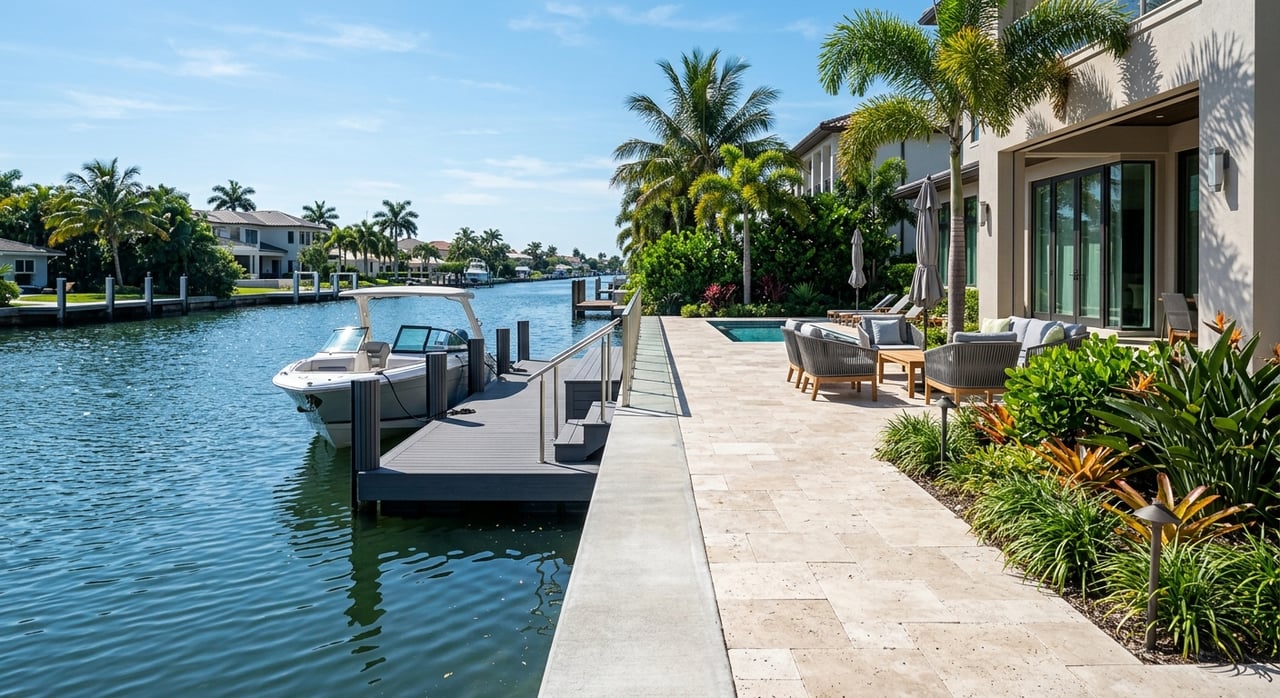
Buying a canal home in Lighthouse Point can feel like finding the best of South Florida living in one address. You may be picturing dockside mornings, quick access to the Intracoastal, or a seasonal home that makes waterfront ownership easy to enjoy. But before you fall in love with the view, it helps to understand the practical details that can affect how you use the property, what it may cost to maintain, and what you need to verify before closing. Let’s dive in.
Why Lighthouse Point draws canal-home buyers
Lighthouse Point is a water-oriented, largely residential city with a strong connection to boating and canal-front living. According to the city, many homes front its 18 miles of waterways, and the city’s comprehensive planning documents state that more than half of its mainly single-family lots have access to the local waterway system through the canal network. You can learn more on the city’s Lifestyle page.
That water access is a major reason buyers focus on this area. The city notes that its east side opens to the Intracoastal Waterway beneath the Hillsboro Lighthouse, and the canal system provides access to the Intracoastal, nearby Hillsboro Inlet, and the Atlantic Ocean. For buyers who want a waterfront lifestyle, that combination can be very appealing.
If you are considering a second home, Lighthouse Point also offers a practical benefit beyond the boating lifestyle. The city’s Police Department has a closed-home and vacation watch program, which can be helpful if you plan to leave the property vacant for stretches of time.
Check bridge clearance first
One of the biggest mistakes buyers make is assuming every canal-front home offers the same boating experience. In Lighthouse Point, that is not always the case.
The city’s canal network includes fixed bridges, according to a city dredging document. That means your route from the dock to open water may be limited by bridge clearance, even if the property itself looks ideal for your boat.
This is why your due diligence should start with the exact path from the property to the Intracoastal or Hillsboro Inlet. Instead of relying on a listing description alone, you will want to confirm whether your boat’s air draft, beam, and draft work for that route.
Why route details matter
Two canal homes can look similar on paper but function very differently in real life. One may provide a smoother route for your vessel, while another may require you to navigate around fixed bridges or deal with tighter dimensional limits.
The city’s dock and seawall regulations also set dimensional rules and setbacks for waterfront improvements such as boat elevators, floating vessel platforms, and floating boat lifts. Those rules can affect how a property is set up now and what changes may be possible later.
Bridge projects to know about
The city’s 2024 Bridge Replacement Master Plan identifies several bridges over local waterways as replacement priorities. These include the Sample Road Bridge, the NE 31st Court Bridge, and bridges over the Pelican, Tern, Alamanda, Egret, and Coral Key waterways.
The city has described the Sample Road and NE 31st Court bridge projects as underway with an estimated completion date of June 2026. If boating access is a top priority for you, it makes sense to review how current and planned bridge conditions may affect your route.
Understand dock and waterfront compliance
A dock that looks usable is not always the same as a dock that is fully compliant. When you buy a canal home, you are not just buying the house. You are also buying the condition, legal status, and usability of the waterfront improvements.
Lighthouse Point’s ordinance sets setbacks for certain waterfront structures based on canal width, and the city prohibits residential boat ramps. That means you should verify that any lift, platform, or dock feature on the property complies with local requirements.
What to verify before you buy
Ask for documentation that helps confirm the status of the waterfront features, including:
- Permits for the dock, lift, and related structures
- Any available surveys showing current conditions
- Records that show whether improvements were completed legally
- Information about setbacks or limitations that apply to the parcel
This is especially important if you may want to renovate, expand, or reconfigure the waterfront setup after closing.
Look closely at the seawall
With a canal home, the seawall can be just as important as the roof, windows, or foundation. A well-maintained seawall helps protect the property and supports the long-term usability of the waterfront.
For waterfront new construction or major additions, the city requires two signed and sealed engineer letters confirming the seawall’s condition and that it can support added upland improvements. The city’s permit guidance also requires outside agency approvals from Broward County, the Florida Department of Environmental Protection, or the U.S. Army Corps of Engineers, along with an updated dock and seawall survey before final inspection. These requirements are outlined in the city’s building permit guidance.
Why seawall history matters
You should not limit your review to whether the seawall looks good today. A better question is whether the seawall has a clear history of permits, recent surveys, and documentation that supports its structural condition.
That matters even more in a city where waterfront maintenance is an ongoing issue. Lighthouse Point states that most waterfront frontage is bulkheaded, and Public Works regularly maintains canals and storm drains while prohibiting dumping into waterways. The city also reported canal dredging underway in March 2025 and announced seawall erosion repairs at four locations in October 2025 using riprap revetment.
For you as a buyer, that means the waterfront edge should be treated as a serious part of the asset, not just a backdrop.
Review canal depth and dredging context
Depth is another item that deserves a closer look. The city’s dredging information says maintenance dredging is performed to -5.0 feet below mean low water and kept at least 20 feet from seawalls or fixed bridges.
That detail matters because navigability is not just about whether a canal exists behind the home. It is about whether your vessel’s draft works with the conditions along the route and near the dock.
A simple rule for buyers
If you own a boat or plan to buy one, match the property to the boat, not the other way around. Confirm how the boat’s dimensions align with canal depth, the route to open water, and any fixed bridge limitations.
This step can help you avoid buying a home that fits your lifestyle in theory but not in practice.
Flood insurance is part of the cost
In Lighthouse Point, flood planning is not optional. The city states that the area is flood-prone and encourages property owners to carry adequate flood insurance.
The city’s Flood Information page also notes that its Building Department keeps FEMA elevation certificates for residential and commercial buildings available on request. That can be a useful resource when you are evaluating a property’s flood-risk documentation.
FEMA states that most homeowners insurance does not cover flood damage. FEMA also notes that National Flood Insurance Program policies typically have a 30-day waiting period, and properties in high-risk flood areas with government-backed mortgages are required to carry flood insurance.
What to ask the seller
Before you make an offer, ask for:
- The current flood zone designation
- A recent elevation certificate, if available
- Any available flood-history documentation
- Current flood insurance information, if applicable
This information can help you better understand both risk and carrying costs.
Plan for hurricane readiness
Buying on the water also means planning for storms well before you need to. Lighthouse Point’s hurricane guidance says the city is in a mandatory evacuation area for Category 3 and above storms.
The city also advises residents to be self-sufficient for at least 72 hours. For canal-home buyers, that should be part of the ownership decision from day one, especially if you are buying a second home or seasonal property.
Seasonal owners should think ahead
If you will not live in the home year-round, ask yourself how you will manage storm preparation, property checks, and waterfront maintenance while you are away. The city’s closed-home program may be a useful part of that plan, but it should work alongside your broader ownership strategy.
For many buyers, the right canal home is not just the one with the best water view. It is the one that fits your boating needs, risk tolerance, maintenance expectations, and long-term plans.
Questions to answer before making an offer
Before you move forward on a Lighthouse Point canal home, make sure you can answer these key questions:
- Does the route from the dock to the Intracoastal Waterway or Hillsboro Inlet pass under any fixed bridges?
- Will your boat fit that route based on its actual air draft, beam, and draft?
- Is the seawall recent, permitted, and supported by current engineering documentation?
- Are the dock, lift, and other waterfront structures permitted and compliant with city setbacks?
- What flood zone applies to the property?
- Has the seller provided an elevation certificate or flood-related documentation?
- If this will be a second home, will the city’s closed-home program support the way you plan to use the property?
These questions can help you move beyond the marketing photos and focus on how the property will perform in real ownership.
A smarter way to buy waterfront
Canal homes in Lighthouse Point offer a lifestyle many buyers are specifically seeking, but they also require more careful review than a typical non-waterfront purchase. Bridge clearance, seawall condition, permit history, flood planning, and canal depth all deserve close attention before you commit.
When you approach the purchase with clear facts and the right local guidance, you put yourself in a better position to choose a home that fits both your lifestyle and your long-term goals. If you are exploring waterfront opportunities in Broward County, Hasnaa Boutros PA can help you evaluate the details that matter and navigate the process with a consultative, informed approach.
FAQs
What should you verify before buying a canal home in Lighthouse Point?
- You should verify bridge clearance, canal depth, boat fit, seawall condition, permit history, dock compliance, flood-zone information, and any available elevation certificate.
Why do bridge clearances matter for Lighthouse Point canal homes?
- Bridge clearances matter because the city’s canal network includes fixed bridges, so a home’s boating access depends on your exact route to open water, not just the fact that it is canal-front.
What seawall documents are important for a Lighthouse Point waterfront home?
- Important documents can include engineer letters, permits, surveys, and records showing the seawall and related waterfront improvements are legally completed and structurally supported.
Do you need flood insurance for a canal home in Lighthouse Point?
- Flood insurance needs depend on the property and loan type, but the city identifies Lighthouse Point as flood-prone, and FEMA states that most homeowners insurance does not cover flood damage.
Is Lighthouse Point a good fit for a seasonal canal-home buyer?
- It can be a practical option for seasonal buyers because of its water access and the city’s closed-home and vacation watch program, but you should also plan for storm readiness and off-site property oversight.